


Helminthic attack is a disease caused by the parasitism of lower worms in the human body.There are 3 types of helminths: roundworms, tapeworms and flukes.More than 200 types of helminthiases can occur in humans, but in our country only 10 of the diseases are parasites.The prevalence of worms is influenced by the weather and economic conditions of the country.People experience helminthic attacks less often in developed countries than in third world countries.
Depending on the nature of the infection, helminthiases are divided into 3 types:
- biohelminthiases (people become infected from domestic animals);
- geohelminthiases (parasite penetration into the body through contaminated soil);
- contagious (infection through contact with other people).
Symptoms of the presence of parasites in the body will depend on the type of worm, its number in the body and the stage of the life cycle.The most dangerous consequences are due to the parasitism of the larval form of the worm.Although sexually mature individuals usually exist only in the intestine, larvae migrate throughout the body, causing pathological changes in organs.Each type of parasite has its own habitat in the intestine.For example, roundworms are usually located in the small intestine, pinworms - in the large intestine.Helminth infections are divided into luminal (the worm remains in the intestinal cavity) and tissue (the parasite penetrates deep into the tissue).Some types of parasitic infection at different stages can occur in both luminal and tissue forms.
Signs
Helminthiasis occurs in 2 stages: acute and chronic.The first begins immediately after the penetration of worm eggs into the body and manifests itself in the form of an allergic reaction.Chronic helminthiases are characterized by various symptoms.Symptoms depend on where the worms live, their number and lifestyle.By consuming some nutrients, worms are involved in metabolic processes, which are indicated by a lack of vitamins and microelements and digestive disorders.Worm waste not only disrupts the natural intestinal microflora, but also suppresses the immune system, which creates ideal conditions for the reproduction of bacteria, fungi and viruses.The risk of developing malignant tumors increases.
Early signs of helminthic attack may appear a few days after the eggs or larvae enter the body.Immediately after infection, skin rashes appear, lymph nodes, liver and spleen enlarge.Some helminthiases have characteristic symptoms.For example, when infected with opisthorchiasis, obstructive jaundice develops.In the presence of single individuals, the chronic phase of helminthiasis can proceed unnoticed.An exception is parasitism in the body of large worms.
With a strong helminthic attack, indigestion, severe pain, and symptoms characteristic of certain types of parasites occur.For example, with pinworms, children experience itching in the anus, which becomes stronger in the evening.Trichuriasis causes hemorrhagic colitis, hookworm causes iron deficiency anemia.Ringworms often clog the intestinal lumen and bile ducts.Especially dangerous are parasites that can cause the formation of cysts - echinococci, alveococci.Even small cysts can cause pus, peritonitis and sepsis.Often helminthic attacks are accompanied by neurotic symptoms.
Species
Enterobiasis occurs when parasitized by pinworms - small bright colored worms.Parasites enter the body by eating dirty vegetables and fruits, interacting with pets, and not following hygiene rules.The long course of enterobiasis is explained by the possibility of self-infection.The life cycle of the parasite occurs in the intestine, where in 14 days it grows from a larva to an adult.Even at the larval stage of development, helminths can cause significant harm to the body.Enzymes secreted by larvae affect the development of inflammatory bowel disease.Adults damage its walls, causing bleeding and facilitating the addition of bacterial infections.
This helminthic attack has specific symptoms - itching in the anal area, especially in the evening and at night.This is when the female comes out and lays eggs.Itching leads to scratching, where bacteria enter.It is the addition of infection that explains the discomfort that does not go away after getting rid of the worms.Enterobiasis in children can cause retardation in physical and mental development.
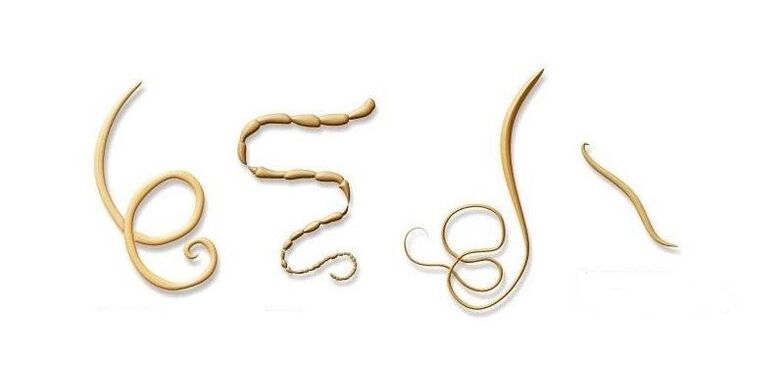
Ascariasis is characterized by parasitism in the body of ascaris - long red-yellow roundworms.The life cycle of helminths begins with the eggs entering the intestine, where they become larvae.Worm larvae migrate throughout the body, damaging tissue.At the end of the larval stage, the parasite penetrates the lungs, from where it returns to the gastrointestinal tract with sputum.The danger of the intestinal phase of the disease is associated with the ability of roundworms to penetrate narrow openings, causing obstructive jaundice.The main symptoms of this type of helminthic attack are abdominal pain, diarrhea, nausea, vomiting, and signs of body intoxication.Roundworms produce strong allergens that lead to severe reactions in the body.
Manifestations of helminthic attacks are often confused with signs of pneumonia, bronchitis, and cholelithiasis.A worm ball can cause blockage and rupture of the intestine.Penetration of worms into the respiratory system can cause suffocation.Trichocephalosis is a helminthic infestation caused by whipworms, small clay roundworms with a long head on the body.Transmission occurs through contaminated food, dirty hands and household items.The main signs of invasion:
- stomach ache;
- decreased appetite;
- diarrhea;
- anemia.
Broad tapeworms are tape parasites that can grow up to 20 m.Helminthiasis caused by this type of worm is called diphyllobothriasis.The extensive life cycle of tapeworms is characterized by host changes.A person becomes infected by eating raw fish and caviar.The larvae attach to the intestinal wall, where they become adults.Helminths are able to multiply 3-4 weeks after the start of the intestinal stage.Symptoms of diphyllobothriasis:
- indigestion;
- iron deficiency anemia.
Hookworm is a disease caused by a large roundworm.People become infected when they come into contact with contaminated soil;larvae are able to overcome the skin barrier and penetrate the circulatory system.Therefore, they are distributed to all organs and systems.In the intestine, helminths attach to the wall and begin to suck blood.The symptoms of this disease in the larval stage are similar to the symptoms of ascariasis.At the intestinal stage of helminthic attack, there is a decrease in the level of protein in the blood and anemia.
Opisthorchiasis is a type of helminthiasis caused by cat fluke.The fluke's life cycle begins in water, the larval stage takes place inside the snail's body.The larvae then hatch into the water and penetrate the bodies of freshwater fish.Infection is promoted by eating raw fish dishes.Adults are parasites in the gall bladder of humans, where they are held by suckers.The acute form of opisthorchiasis is manifested by pain in the epigastric region, high body temperature, joint and muscle pain, and allergic rashes.The chronic form leads to the development of hepatitis, cirrhosis and liver cancer.Even after the parasite is expelled, pathological changes remain in the liver.
Echinococcus lives in the human orgasm in the middle stage of its life cycle.This is a short tapeworm.The following causes contribute to human infection:
- contact with sick pets;
- failure to comply with personal hygiene rules
- consumption of contaminated household goods.
Parasites are often found in dogs, wolves and cats.After the worm eggs enter the body, they produce an oncosphere - an intermediate form.From the digestive system they penetrate into the circulatory system, from where they are carried through the bloodstream to all organs.Once in the tissue, the oncosphere becomes a fin - a cavity surrounded by two shells.Finna, developing, leads to the appearance of cysts.Symptoms of the disease depend on the size of the tumor.In addition to tissue destruction, echinococci can cause pus and body poisoning when the cyst ruptures.
Complications of any helminthic attack are associated with the effects of worms on tissues, the destruction of which can cause organ dysfunction.Often helminthiases are complicated by the addition of bacterial infections.The emergence of parasites, when they leave the body, can lead a person to psychological trauma that requires long-term treatment.

Detection method
Due to the large number of signs that exist in helminthic attacks, determining the possible route of infection by interviewing the patient plays an important role.To detect eggs or body parts of the parasite, feces, bile, and sputum are examined.When conducting a general blood test, a significant increase in the number of eosinophils may indicate the presence of parasites.In some cases, an immunological test that can detect specific antibodies is required.Additional methods for diagnosing human parasites are:
- computed tomography;
- Ultrasound;
- X-ray examination.
Disposal method
The basis for the treatment of helminthic attacks in adults and children is the use of anthelmintic drugs.
To treat ascariasis and enterobiasis, drugs that are highly effective against tapeworms are most often used.Usually, 1 tablet is enough to get rid of parasites, but sometimes the treatment is carried out according to a scheme that involves repeating the drug after a certain break.Echinococcosis is usually treated surgically, after which drugs are prescribed that restore the function of the affected organs.
For some parasites, joint treatment of all family members is recommended.An important part of the therapeutic course is compliance with hygiene rules.To eliminate the symptoms of the disease, antihistamines and probiotics can be prescribed.
Prevention
You can protect yourself from parasitic infections by following the rules of personal hygiene and heat treatment of food.Soil treatment is recommended to help reduce the number of helminth eggs.Timely examination and treatment of domestic cats and dogs will help prevent the occurrence of helminthiases in children.The risk of contracting a parasitic disease increases many times when in contact with an abandoned animal that is a carrier of several types of parasites.
It is mandatory to wash vegetables, fruits and herbs, because parasite eggs can enter the body with soil particles that remain on them.You should avoid eating raw, salted or dried river fish.Meat must be purchased from a trusted seller who can provide a quality certificate.